
The 2 Emma behind the name

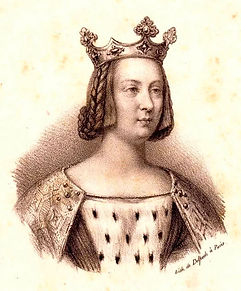
The two “Emma” behind the name.
The barge is named "Emma." It carried this name and sailed across all the waters of Occitanie for over 20 years, before being renamed "Black Mountain" for a few years.
When Louise and I acquired the boat, we decided to restore its original name. We believe that a boat's name carries history and a spirit with it.
As it has been named Emma twice, there are two remarkable women of history behind the name: Emma de France and Emma de Provence. Each one lends a touch of heritage, elegance, and story to the journey.
Both Emma were remarkable women who shaped France around the year 1000, a feudal period of high instability, a world dominated by men, iron, where the knowledge of the antiquity was lost for the doctrine of the church.
Emma de France: A Queen amongst Kings.
Born in 894, Emma de France was the daughter of King Robert I and Beatrice of Vermandois.
In the history of the queens of France (or rather, the queens of the Franks, for that era), the figure of Emma, who lived during the final years of the Carolingian dynasty, is often overlooked. And yet, Emma, Duchess of Burgundy through her marriage to Raoul (also known as Rudolph), became Queen of France when he was crowned in 923 - at a time when Emma’s own family had risen in rebellion. Her father, Robert I de Neustrie, had proclaimed himself king in opposition to the reigning and “official” monarch, Charles the Simple. It was Emma who did everything in her power to ensure that her husband Raoul would become King of the Franks, especially after her father Robert I was killed at Soissons. With the support of her brother Hugues, she pushed Raoul’s claim to the throne while her brother-in-law, Herbert II of Vermandois, kept the “legitimate” king, Charles the Simple, imprisoned
Emma was the first Frankish queen to be crowned in Reims (July 923), and when her husband was off fighting in one region. She personally commanded the remaining available forces elsewhere. She led successful sieges at Avalon and Château-Thierry and defended the city of Laon, both against her own brother-in-law, Herbert II.
Until her death in 934, Emma stood steadfastly beside her husband, helping to crush various uprisings from those who rejected the new regime, as well as repelling incursions by Viking bands (since the creation of the Duchy of Normandy had, in truth, resolved nothing).
Her leadership and diplomatic skills were instrumental in maintaining stability during a volatile period in French history. She was known for her strength, diplomacy, and quiet influence in a world dominated by men.
She held lands in her own right, and her marriage reinforced crucial alliances. Her presence aboard Emma the barge brings nobility and strenght from times long gone, Emma de France shares a sense of timeless French grace.

Emma de Provence: A Countess of culture and arts
Little is known about Emma de Provence, also called Emma de Venasque. She was born around 1000. She was the daughter of Rotbold III of Provence and Ermengarde. In 1019, she married Guillaume III Taillefer, Count of Toulouse. In 1037, Emma inherited the County of Provence upon her brother's death. She transferred the joined county of Toulouse and Provence to her son, setting a significant political force in the region. Her patronage of culture and religion left a lasting impact on the Provençal landscape.
Through her union, she brought the Cross of Provence into the Toulouse lineage. The cross later became the cross of Languedoc, and remains as the current iconic Occitan Cross. This emblem, with its twelve dots and equal-armed design, became a lasting symbol of Occitan identity, unity, and cultural pride. You’ll see it today flying red and gold above town halls and boats, ours included.
She brings to Emma the poetry of the south, a symbol that has gathered people for a thousand year. She brings grounding in the region and the humility of the ones who do, change and build but are not remembered.

Two Women, One Soulful Journey
Together, Emma de France and Emma de Provence shape the dual soul of our barge: noble yet rooted in the region, historic yet alive, European yet unmistakably southern. When you step aboard Emma, you're not just floating in a region, you’re traveling with the spirit of queens.
Historical Timeline
Emma de France
894 – Emma de France is born, daughter of King Robert I of France and Beatrice of Vermandois.
921 – Emma marries Rudolf of Burgundy, who becomes King of West Francia in 923; Emma is crowned queen consort.
931 – Emma captures the fortress of Avallon.
933 – Emma conducts a successful siege of Château-Thierry.
934 – Emma de France passes away.
Emma de Provence
c. 1000 – Emma de Provence is born, daughter of Rotbold III of Provence and Ermengarde.
1019 – Emma marries Guillaume III Taillefer, Count of Toulouse, bringing the Cross of Provence into the Toulouse lineage.
1037 – Guillaume de Toulouse dies. Emma inherits the County of Provence upon her brother's death.
1062 – Emma de Provence passes away, her surviving son inherits of the county of Toulouse and Provence.


Comments